

School is finally out for my kids—and I’m sure it will be soon for yours if it isn’t already. And that means, for better and worse, they’ll be home more.

Even with camps and summer programs, summer feels different. Maybe it’s the longer days. Maybe it’s the lack of homework and school activities. Maybe it’s just guilt brought on by the expectations of a culture that glorifies attentive mothering but provides few structures to support parents. Whatever it is, I feel more called to action in the summer.
Learning loss or the “summer slide” is complicated
One thing that is always in the back of my mind—especially as an educator with a focus on literacy—is the idea of the “summer slide,” the concept that kids experience learning loss, especially in reading and math, during the summer.
This is not a post intended to scare you into summer reading tutoring. Far from it.
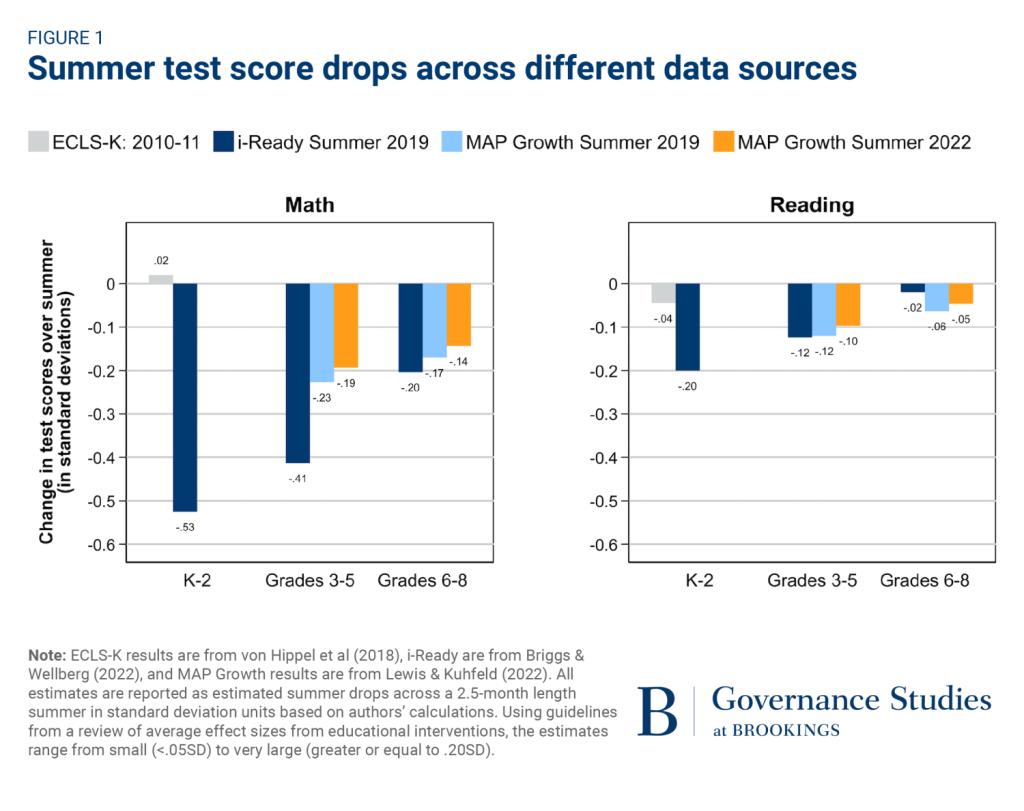
In fact, despite the fact that we’ve been wringing our hands over summer learning loss for the past hundred years, recent scholarship has called into question some of the early studies that documented it. This is not to say there is nothing to worry about, just that it’s more complicated than (and maybe not as bad as) we thought.
According to a Brookings Institute review of the research, there are consistent “average test score drops during the summer in 3rd through 8th grade,” but “differences in the magnitude of test score drops across studies imply that we still cannot say with certainty whether summer learning loss is a trivial or serious issue.” The drops tend to be larger in math than reading. Hearteningly, there doesn’t seem to be evidence of disparities in the amount of learning loss across socio-economic groups, as was previously thought.
Now, Brookings and common sense both dictate that, until the debate is settled, it’s probably better to err on the side of preventing possible loss than ignoring it. But that doesn’t mean that you have to enroll your child in expensive academic programs or spend your summer planning lessons and fighting with your kids to focus. That isn’t likely to work well anyway. Because the thing about developing reading skills is, the reader needs to be engaged. And that is easier when it involves joy and fun.
Easy strategies for preventing learning loss in reading this summer
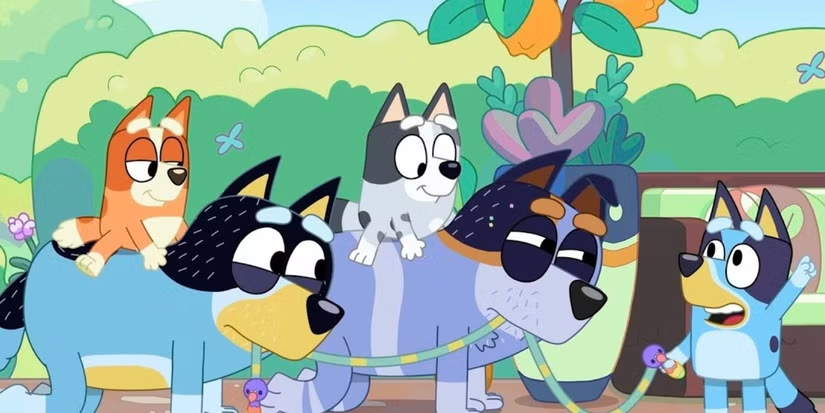
I’m a huge proponent of play as an ideal context for learning. When we’re playing, the stakes are low, so we’re more comfortable making mistakes, more comfortable going out on a limb.
Play for parents can be work, though. We’re not all Bandit Heeler, always game. So let’s try to make it simpler.
Below you’ll find a variety of simple strategies you can try out this summer—and they don’t take a lot of work.
There are so many layers to literacy and reading that you couldn’t address them all in one summer even if you wanted to. I’ve addressed some key types of strategies below, but there are so many!
Don’t worry about that. Just try out one or two, have some fun with your kids, and feel good that you’re taking one small step against (the possibility of) reading loss.
And if you’re more actively concerned with your child’s reading or writing and want some support, contact me. I am happy to work with you in person (in the central Contra Costa area) or online. And I promise to make it fun!
Strategy Type 1: Building Background Knowledge
Background knowledge is key to vocabulary development and reading comprehension. The more your kid knows about the world and how words fit together in webs of meaning, the better their reading comprehension will be.
Field Trips!
Get out of the house and talk about what you see: Oral language development transfers to reading! Ask kids what they notice, what they wonder, and what connections they can make to things they’ve seen before. Model doing the same: talk about what you notice and wonder and connect to. Give them words for things they may not know. It doesn’t have to be serious or highbrow or expensive. Make it silly and playful! Talk about something you see on a walk.
Thematic Investigations
Pick something your kid asks a question about or has an interest in (or something you’re excited about!). Then find books and movies (and maybe games, field trips, etc.) on that topic. This is multi-modal input. This is research across texts. Read/watch/play together and talk about it with them. Learn new words that are important to that topic. Use them in silly ways. Similar to the field trip: ask questions and model interest (notice, wonder, connect).
Categories Game
On a car ride? Pick a category (“zoo animals,” “presidents,” “kinds of cereal”) and see how many words you can come up with that fit it. (This helps them build up their semantic webs.)
Strategy Type 2: Building Positive Reader Identity and a Culture of Reading
Research has shown that having a positive identity of yourself as a reader is an important aspect to motivation. Kids need to see reading as enjoyable and worthwhile. They must be able to see “reading as related to their personal interests and goals” and be something they are capable of and can improve, or they won’t want to bother putting in the work.
Let Them Read Whatever They Want
If you take nothing else away from this post, take this: The single best way to improve reading is to read, so let your kids read whatever they want. Comic books, graphic novels, story books, Captain Underpants, Dog Man, magazines, I Survived . . . , that book they’ve read seventy bajillion times. Really. Whatever. (I encourage reluctant older teens to read smutty romance if it’s what floats their boat.)
Even if they’re not improving vocabulary or broadening their minds, they’re building fluency and stamina, which is crucial for motivation and comprehension.
Younger kids need to be read to, but you can mix it up. Call on the community: grandparents, aunts and uncles, dinner guests, babysitters, library story hours, and read-alpines, like on the Libby app (Have you downloaded the Libby app yet?!) —search for “read-along” and pass them your phone.
But younger kids also need to have the opportunity to “read” on their own as well—to develop that sense that they are competent readers. Hand them a book they know well and ask them to tell you what happens on each page. Or, what is happening in each picture.
Let Them See You Reading
I know, I know, they see you read your phone all the time. Me too. But they need to see you reading and not just scrolling to know it can be fun. Modelling is the best teacher, after all. So, don’t do all of your reading after they’re in bed, if you can help it.
When you check books out of the library for them, get yourself one, too. (Again, the Libby app is amazing for this. I promise I don’t get kickbacks. I’m just a fan.) Pick up a magazine and read it while they snuggle up next to you on the couch. Have a night where you and your kid each read your own book instead of watching TV or scrolling on devices.
Also, talk about the books you’re reading. “Oh man, this crazy thing just happened in my book!” “That reminds me of this book I’m reading.” “I’m enjoying this book so much!” Or even “Ugh, I’m so bored with this book. I’m going to put it down and get another.” Even if they just overhear you talking about books with a friend or a family member, that’s infiltrating their minds and increasing their opinion about reading.
Encourage them to trade recommendations with friends and classmates, and trade recommendations with them yourself. You don’t have to like the same books, but take your kid seriously as part of your reading community.
Book Challenges
There are several ways to do this, but book challenges are a great way to build in a little visible external motivation (and we all use both internal and external motivation all the time).
Let your child set a goal for themselves and work toward it. It could be pages read, number of books, time spent reading, numbers of days where they read, types of genres, etc. Consider a prize if they reach their goal (not necessary). Consider creating a challenge for yourself too—you can compete or collaborate to support each other.
There are websites that offer a social aspect to this, like Goodreads and Bookwyrm. If you are comfortable having them online, this could be a fun way to bring in some community support.
Many libraries have summer reading challenges for kids. Some offer prizes for completed challenges. Contra Costa Library’s is here.
Strategy Type 3: Playing with Words + Sentences
Kids need to be able to take apart and construct words and sentences. They are the building blocks of reading.
Word Games
Hangman
Online word games
ABC game: Find each letter in order as you walk or drive around
I spy using starting letter (“I spy with my little eye something that starts with the letter/sound…”)
Bananagrams (sometimes we just make as many crosses as we can collaboratively)
ABC Scavenger Hunt: Write down all the letters of the alphabet and have kids try to find things they see for each letter. Encourage them to think of synonyms/related words if they get stuck (a Chair is also Furniture is also a Seat)
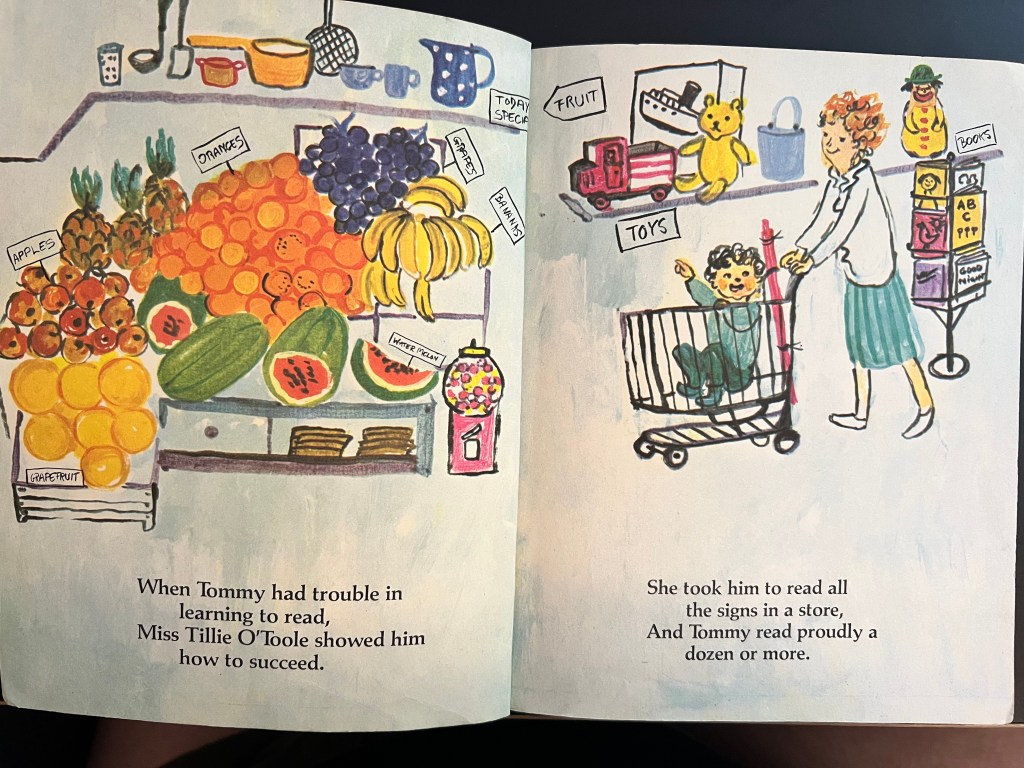
Grocery shopping. Not a game, but a great way to practice language. If kids can read and write, have them make the list and cross it off. If not, point out signs with first letters and connect them to the physical object they name.
Sentence Games
License Plate News: I used to love to make up sentences and phrases out of the three letters on most car license plates. In this version, you need to make headline-style sentences, like MED: Man Eats Dog or TPM: Tennis Player Misses. Sometimes they’re silly, sometimes just weird. Make sure they have a subject and a verb! — you could even try making up a collaborative poem, each license plate is a line
Mad Libs (free printables)
Collaborative Story Telling: one person starts and then passes it to the next person and so on. It works great when there is a little bit of a cliff hanger at the end of each turn so there is an immediate story decision that has to be made (this supports practice with narrative structure, as well!)
Collaborative Sentence Building: word by word, build the longest meaningful and grammatically correct sentence you can (which will require adding adjectives and adverbs in various places, using conjunctions, etc.)
Pick one. Try it out. No pressure.
Really.
Play with reading and language this summer. Have some fun with your kids. Relationships deepen learning.
And, again, if you’re more actively concerned with your child’s reading or writing and want some support, contact me. I am happy to work with you in person (in the central Contra Costa area) or online. And I promise to make it fun!
 Joyful Literacy
Leave a comment